
Featured
How to Handle Alert Fatigue
Reduce noisy alerts with cleanup, grouping, suppression, and Prometheus Alertmanager workflows.


Field notes from taking companies to the frontier of DevOps engineering: tutorials, postmortems, and the practices behind them.
71 articles
Reduce noisy alerts with cleanup, grouping, suppression, and Prometheus Alertmanager workflows.

Define DevOps consulting scope by outcomes, ownership, and handoff readiness.

Define DevOps consulting success around ownership, reliability, observability, and handoff readiness.

Organize Terraform modules, environments, state, and ownership for scalable infrastructure management.
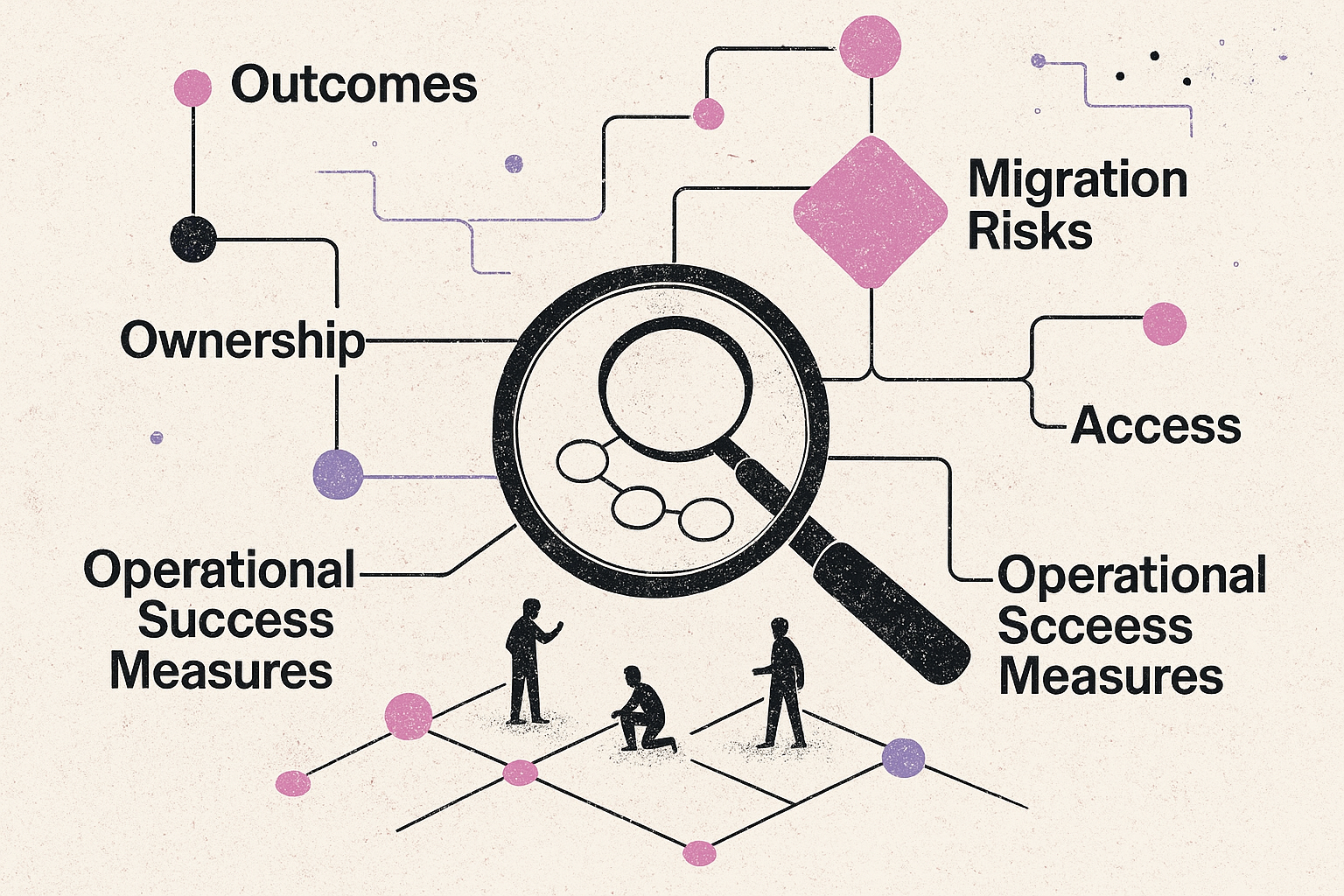
Define DevOps outcomes, ownership, access, migration risks, and operational success measures.

Balance Kubernetes resource requests and limits to reduce throttling and wasted capacity.

Protect critical workloads during Kubernetes node drains using disruption controls.

Scale AWS delivery with accountable consulting, IaC, rollback plans, and outcome metrics.

Tune HPA thresholds and stabilization windows to prevent unstable Kubernetes scaling.

Evaluate DevOps firms by delivery proof, security fit, and handoff quality.

Use taints and tolerations safely to control scheduling without stranding workloads.

Tune liveness probe thresholds to prevent unnecessary Kubernetes pod restarts.

Compare DevOps providers by scope clarity, delivery proof, and handoff expectations.

Align DevOps tools with startup maturity, operational capacity, and release risk.

Evaluate DevOps providers by shipped infrastructure changes, clearer runbooks, and reduced risk.

Scope DevOps work to improve releases, ownership, recovery, and cost control.

Onboard DevOps partners with controlled access, product context, documentation, and reliability goals.

Clarify DevOps pain, ownership, observability, and handoff before hiring outside support.

Assess DevOps staff augmentation fit through scope, ownership, outcomes, and delivery risk.

Lean DevOps consulting addresses delivery bottlenecks without overbuilding platform operations.

Define DevOps priorities, constraints, access needs, and outcomes before requesting estimates.

Clarify delivery pain, ownership gaps, and operational readiness before outsourcing DevOps.

Assess managed clusters, operations ownership, observability, database placement, and hidden costs.

Adopt managed Kubernetes with defined ownership, IaC, observability, and cost controls.

Define DevOps ownership, access boundaries, handoffs, and success metrics before kickoff.

Align DevOps support with delivery bottlenecks, ownership gaps, and scaling risks.

Reduce cloud spend with ownership, usage visibility, and delivery-safe governance.

Set scope, access, ownership, and success measures before DevOps consulting starts.

Diagnose scaling bottlenecks before selecting DevOps tools, platforms, or staffing.

Match DevOps help to clear delivery bottlenecks before buying broad packages.

Assess managed Kubernetes readiness, IaC, RBAC, limits, upgrades, and incident ownership.
Set outcomes, access, ownership, and knowledge transfer before consultants begin.

Prioritize DevOps work by delivery risk, ownership, observability, and measurable outcomes.

Define rotations, escalation paths, alert rules, and ownership before scaling reliability teams.

Choose essential DevOps tools with clear ownership, strong observability, and repeatable CI/CD.

Assess Azure DevOps fit, setup effort, access needs, and adoption scope.

Assess workloads, dependencies, security needs, and rollout risks before migrating to Kubernetes.

Select logging, metrics, tracing, and alerting tools that support startup scaling.

Build CI/CD pipelines with tested merges, protected secrets, controlled releases, and documented rollback.

Plan Azure subscriptions, permissions, resource groups, and budgets before your startup infrastructure scales.

Evaluate operational readiness, networking, IaC, observability, and fit before adopting Azure.

Define subscriptions, IAM, environments, IaC, and cost controls before scaling Azure.

Shape startup DevOps around IaC, CI/CD, observability, ownership, and incident response.

Organize repo wikis around ownership, runbooks, architecture, and required maintenance.

Review Azure DevOps projects, permissions, pipelines, credentials, deployments, and rollback paths.

Create safer Azure DevOps releases with staging, scoped permissions, ownership, and rollback.

Define workflows, ownership, maintenance, observability, and developer experience before choosing tools.

Define infrastructure problems, ownership, handoff, and success measures before hiring DevOps help.

Define DevOps deliverables, ownership, knowledge transfer, and success measures before hiring.


Assess ownership, reliability, cost, and readiness signals before choosing a DevOps model.

Set up Azure DevOps for safer CI/CD, approvals, access, and rollbacks.

Evaluate CI/CD fit by maintainability, access control, deployments, and team capacity.

Practical guidance for selecting DevOps tools that fit your team’s workflow and maturity.

Optimizing Kubernetes Management with GitOps and CD Tools.

Pragmatic advice for improving DevOps by approaching it as an internal service provider.

Principles for software engineering teams to manage databases and use data smoothly.

Upgrade Kubernetes with confidence: A step-by-step guide to ensure seamless updates, maintain stability, and avoid breaking changes.

When and how to use Terraform to deploy Kubernetes resources.

Deploy a Kubernetes Application that deploys its AWS resources using Crossplane manifests.

Deploy AWS resources using Crossplane. Step-by-step guide to configure the AWS provider and create a S3 bucket.

A methodical guide to building a DevOps team, including setting roles, strategies, tactical ideas, and management advice.

Deploy Apache Airflow on AWS EKS for scalable data pipelines. Step-by-step guide to setup, deploy, and optimize for performance and security.

A Terragrunt boilerplate to minimize regrets on GCP.

Which one should you choose: A DevOps Agency, a DevOps Consultancy, or a DevOps Services Company? Hint: Probably a mix.

A practical playbook for founders and engineering managers to stop wasting time trying to get started with DevOps the right way


Striving for One-Click Environments speeds up development, improves code quality, and improves recoverability.

Required DevOps Capacity = (Scale * Complexity) / Leverage.

Increasing your income as a DevOps Engineer boils down to one main thing: Deliver more value.

Understanding the role of the DevOps engineer is crucial in order to hire the right candidate, and make DevOps a success in a company.
